
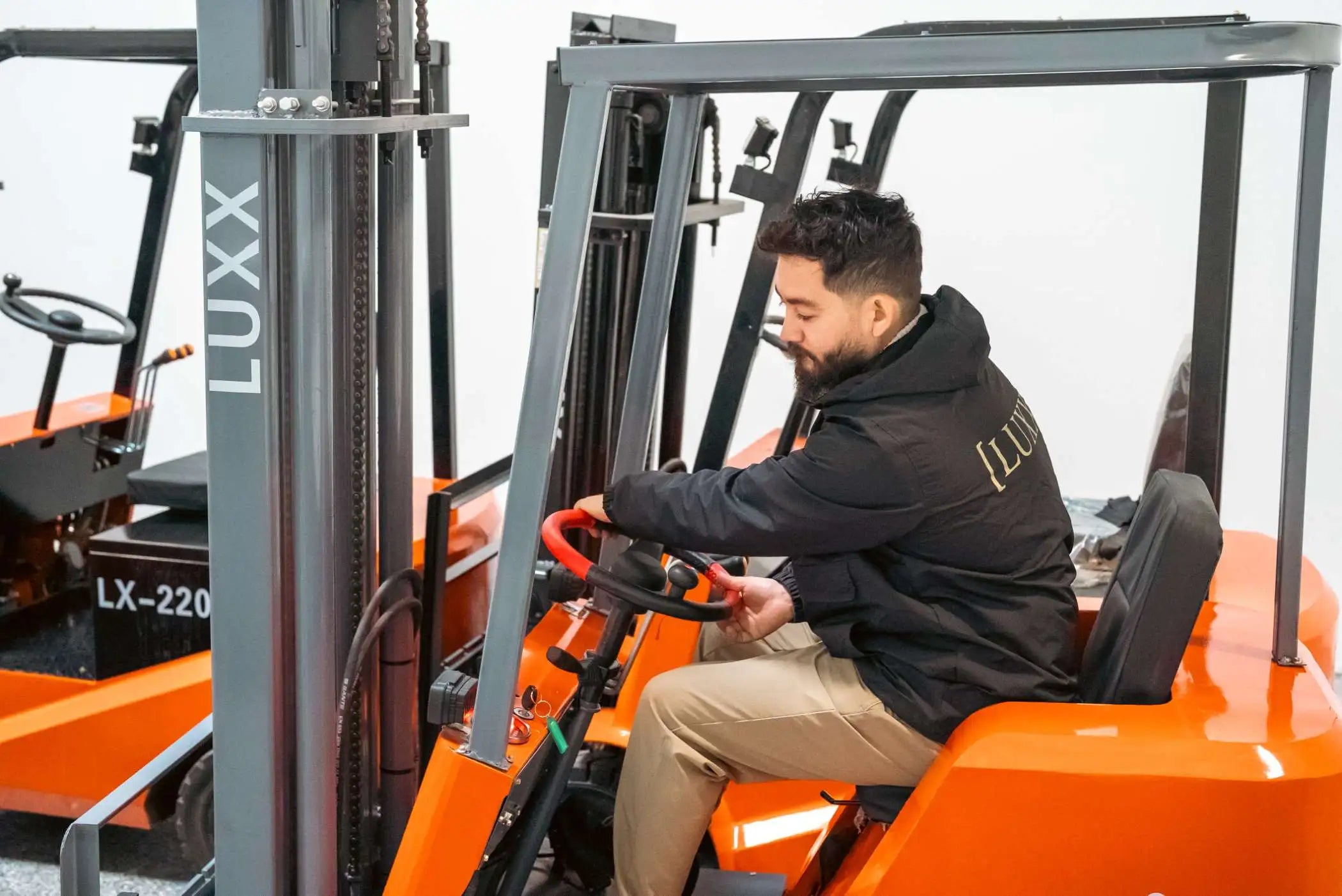
Why Safety Matters in Warehouses
Forklifts are essential for warehouse operations, but improper use can lead to accidents, equipment damage, and downtime. Indoor environments present unique challenges, including tight aisles, pedestrian traffic, and confined spaces. Prioritizing safety ensures both your employees and inventory stay protected.
Choose the Right Forklift for Your Space
Compact electric forklifts are ideal for indoor operations. Their small turning radius and precise controls help operators maneuver in tight aisles and crowded areas safely. Selecting the right forklift for your warehouse layout is the first step toward minimizing risks.
Train Operators Thoroughly
Proper forklift training is critical. Operators should understand load limits, turning techniques, and safe speed limits. Regular refresher courses help reinforce safe practices and reduce the risk of accidents in high-traffic areas.
Maintain Equipment Consistently
Routine maintenance prevents mechanical failures that could cause accidents. Luxx forklifts use lead-acid batteries that require minimal maintenance while providing consistent power, reducing unexpected downtime and ensuring safe operation. Regularly check brakes, tires, forks, and warning systems.
Follow Warehouse Safety Protocols
-
Keep aisles clear of obstacles and debris
-
Use warning signs in high-traffic areas
-
Ensure proper lighting for all work zones
-
Implement designated pedestrian pathways
Conclusion
Safety in indoor warehouse operations starts with the right equipment, proper training, and consistent maintenance. By choosing compact electric forklifts with reliable lead-acid batteries and following safety protocols, businesses can reduce accidents, protect staff, and keep operations running smoothly.
Share:
Why Electric Forklifts Are the Best Choice for Your Warehouse